
Shelby County Criminal Case Files
A criminal court record begins when a criminal matter reaches the court and the clerk opens or maintains the case file. In Shelby County, Circuit Clerk Mary H. Harris is the custodian for Circuit Court and District Court criminal records. The file can connect the filed accusation to arraignment, the defendant's plea, motions, settings, court orders, the result of a plea or trial, and sentencing. It may also include bond, fines, costs, restitution, receipts, and later payment enforcement. A booking charge is only one early snapshot. The court case record is the longer legal history.
Shelby County is Alabama's Eighteenth Judicial Circuit. Circuit Court is the general-jurisdiction trial court and handles felony criminal cases. District Court handles misdemeanors and preliminary criminal matters. Municipal courts keep many city ordinance and city misdemeanor cases, so an Alabaster, Calera, Columbiana, Helena, Chelsea, or other city matter may remain with that city's court. The charge-focused path is described in Shelby County arrest records and court charges, while this criminal records page stays centered on the complete court file.
Search Shelby County Criminal Records
Start with the Alacourt Shelby County docket search. It searches County 58 by setting date and can narrow the list by a last name. That public docket is useful for scheduled court activity, but it is not a promise that every case document is free online. Alacourt Access offers broader on-demand state trial-court record access and may require an account or payment. AlaFile is for filing and e-notices, not a public criminal case search.
- Open the Shelby County docket page and select the relevant setting date.
- Add the defendant's last name when it will help narrow the docket list.
- Use the case number and division shown in a result to identify the correct criminal file.
- Review entries for arraignment, pleas, motions, hearings, disposition, and sentencing.
- Send the official request form to the Circuit Clerk when a certified or complete copy is needed.
The court record search and copy request accepts a case number or an approximate filing year, identifying details such as date of birth or aliases, and a certification choice. Mail requests go to Mary H. Harris, Circuit Clerk, P.O. Box 1810, Columbiana, AL 35051. The form says to allow two weeks and directs fee questions to (205) 669-3760. In-person help is available through the Circuit Clerk in Columbiana, and the criminal division phone directory lists direct staff numbers.
Shelby County Criminal Case Flow
Each stage adds a different kind of entry to Shelby County criminal court records. The filed charge identifies the accusation. Arraignment addresses the charge and plea. Pretrial entries may log motions, continuances, subpoenas, bond changes, and hearing settings. A plea or trial creates the basis for the result. The disposition resolves each charge, and sentencing sets the punishment and financial obligations after a conviction.
Case flow: Charges Filed › Arraignment › Pretrial / Motions › Plea or Trial › Disposition › Sentencing
- Arraignment
- The court addresses the filed charge and records the defendant's formal plea.
- Pretrial and motions
- Docket entries can show requests for orders, hearing dates, continuances, and other case activity.
- Plea or trial
- The record identifies a plea, finding, or other supported result.
- Disposition and sentencing
- Each charge receives an outcome; a conviction can then carry a sentence, costs, fines, restitution, or supervision terms.
The court entry should be read in sequence. An early charge line does not prove the final outcome, and a later order can modify bond or payment terms. Shelby County criminal records are most useful when the charge, disposition, and sentence are read together.
The Shelby County District Attorney's Office, led by Matt Casey, prosecutes state cases in the Eighteenth Judicial Circuit. The local Public Defender's Office names Michael Hensley and can be reached at (205) 858-8402. Those offices serve different roles in a case. Neither replaces the Circuit Clerk as custodian of the criminal court record.
What Shelby County Criminal Records Show
The exact fields depend on the case and access channel. The Circuit Clerk request form relies on the case number, filing year, identifying information, and certification choice. Court dockets add hearing and setting data. Criminal bookkeeping adds disposition-linked money data. Together, these fields help separate people with similar names and show whether an entry is an accusation, an order, a final result, or a payment record.
| Field | What It Shows |
|---|---|
| Case number and division | Identifies the file and whether the matter is in Circuit or District criminal court. |
| Defendant identifiers | Name, aliases, and date of birth may help the clerk distinguish one person from another. |
| Charges | Lists the accusation or accusations filed in the court case. |
| Plea and hearings | Shows the formal response to a charge and scheduled or completed court events. |
| Disposition | States the outcome of each charge, such as a conviction, acquittal, or dismissal when recorded. |
| Sentence and money | May show punishment, fines, costs, restitution, cash-bond action, and payment status. |
The Shelby County Jail mail rules concern communications with people in custody, not the contents of a court case file.
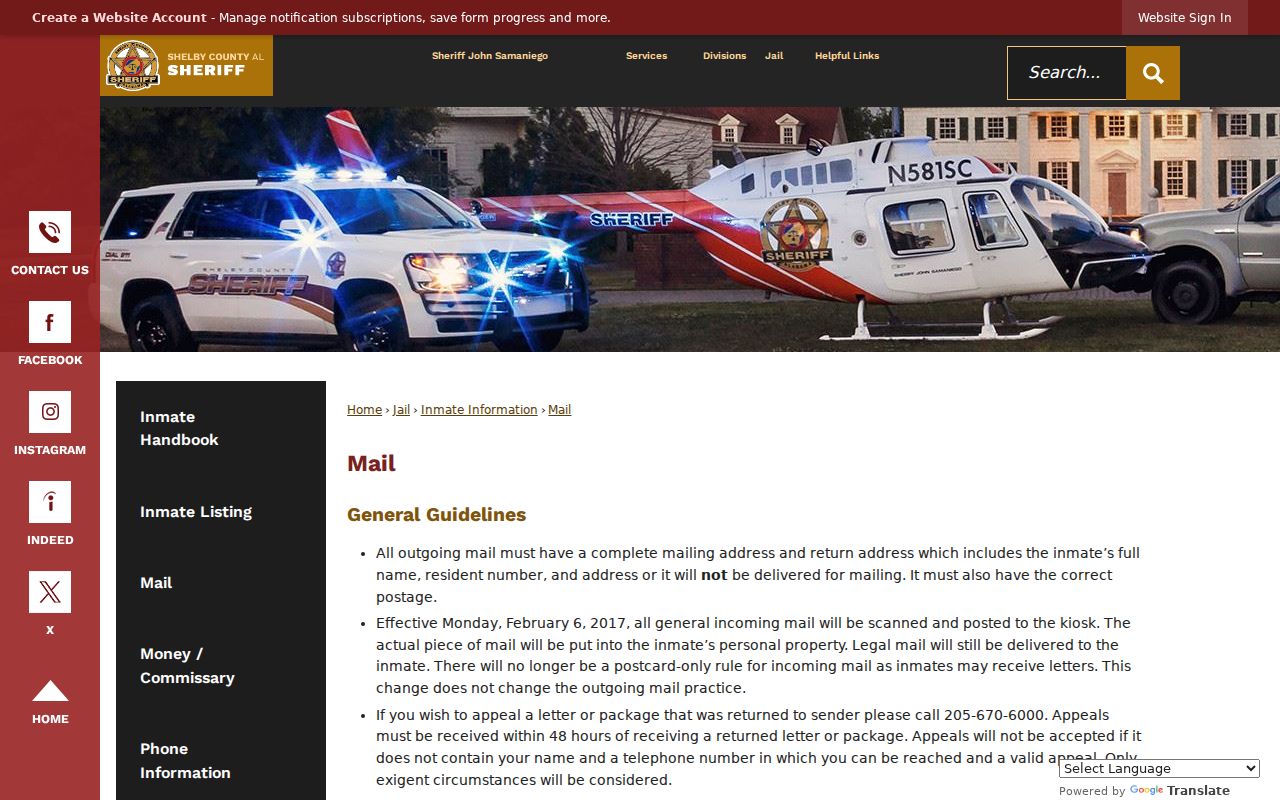
This source view helps mark the boundary between jail operations and criminal court records kept by the Circuit Clerk.
Shelby County Charges vs Convictions
A charge is an accusation recorded at the start or during the case. A conviction is a guilty result reached by plea or finding. Shelby County criminal court records can contain charges that do not end in conviction, so the charge list must be compared with the disposition for each count. A dismissal, acquittal, or other non-conviction result should not be described as a conviction.
| Charge | Conviction | |
|---|---|---|
| Stage | Accusation | Verdict or plea |
| Burden of Proof | Probable cause | Beyond reasonable doubt |
| Best field to check | Filed charge entry | Disposition and sentence |
The Sheriff's commissary and deposit rules govern inmate accounts rather than court fines, costs, or restitution.

Keeping those money systems separate prevents an inmate deposit from being mistaken for a court-ordered criminal payment.
Read Shelby County Criminal Outcomes
Disposition means the outcome of a charge or case. The safest reading method is count by count: match the charge with its plea, final disposition, and any sentence. A judgment may follow a guilty plea or trial result. A dismissal ends that charge without a conviction. A continuance only postpones action, and an appeal seeks review. If a lower District or Municipal Court matter is appealed to Circuit Court, Alabama law permits a de novo proceeding, which means a new trial as if the first had not occurred.
Shelby County criminal bookkeeping records can show cash bonds, court costs, fines, drug court supervision fees, restitution, receipts, and delinquent-money reports. The criminal bookkeeper is distinct from the clerk staff who locate pleadings and orders. AlaPay accepts payments for disposed Circuit, District, and selected Municipal criminal cases with an outstanding balance. A payment screen is not a substitute for the judgment or case action summary.
The jail phone information describes inmate communications, another custody service outside the Shelby County criminal case file.
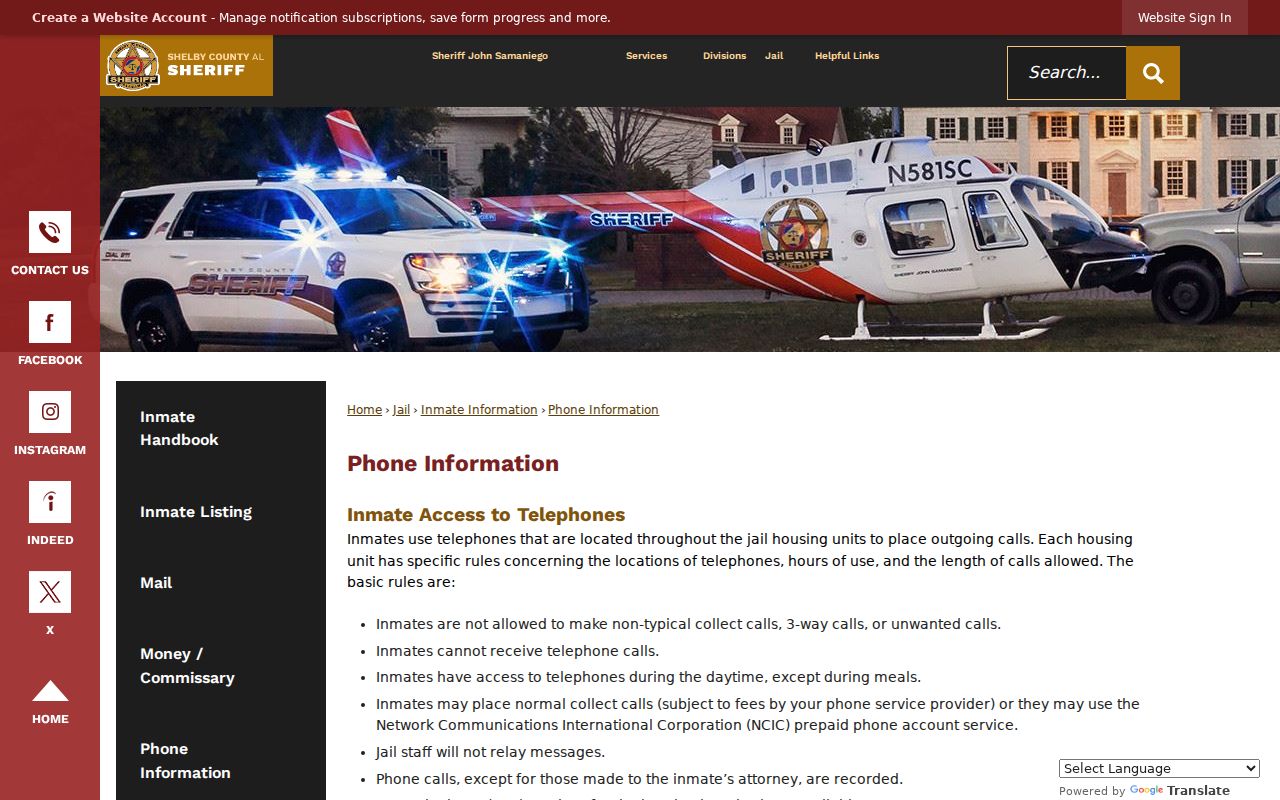
The pictured official page reinforces that jail privileges and court dispositions come from different Shelby County record custodians.
Shelby County Expunged Criminal Records
Restricted, sealed, and expunged do not mean the same thing. Shelby County juvenile files should be treated as restricted unless the court confirms access. Sealing limits public visibility under a court order or law. Alabama expungement uses a petition process for eligible charges under defined conditions. When granted, agencies forward records to ALEA and separate them from the official criminal history record. Public portals may no longer show the material.
| Point | Sealed or Restricted | Expunged |
|---|---|---|
| Public visibility | Limited under the governing order or law | Ordinary public criminal-history access changes after a granted petition |
| Method | Depends on the file and legal authority | Requires Alabama's statutory petition process |
| Shelby route | Ask the custodian whether access is allowed | Paper-file the petition and certified records with the Circuit Clerk |
The local checklist requires one offense per petition, an Official Certified Criminal Record from ACJIC/ALEA, and a certified arrest, disposition, or case-action record. Shelby District or Circuit Court copies used for this purpose cost $10 per charge or count. The Circuit Clerk expungement instructions state that the filing is on paper and the clerk cannot decide or advise whether a person qualifies.
Access Shelby County Criminal Records
Alabama residents have a baseline right to inspect and copy eligible public records, subject to legal exceptions. For Shelby County criminal court records, the direct custodian route is the Circuit Clerk, not the county's general records office. If the docket or Alacourt Access does not supply the needed document, request a search or copies by mail or in person. The form requires a $10 deposit. Computerized searches from 1993 forward have no search charge; paper and archive or microfilm searches cost $20. The first 20 copy pages cost $5, each added page costs $0.50, and certification costs $5.
Key Statutes:
Alabama Code § 36-12-40 gives residents the baseline right to inspect and copy eligible public records unless an exception applies.
Alabama Code § 36-12-41 addresses copies supplied on request and payment of lawful fees.
Shelby County public-record requests are a fallback for records held by county departments, with online, mail, and in-person channels. That general route does not replace a court-record request to the Circuit Clerk. If the case is municipal, contact the city court. Federal criminal files are also separate.
The Richard Shelby Federal Building and Courthouse information belongs to the Northern District of Alabama, not Shelby County Circuit or District Court.
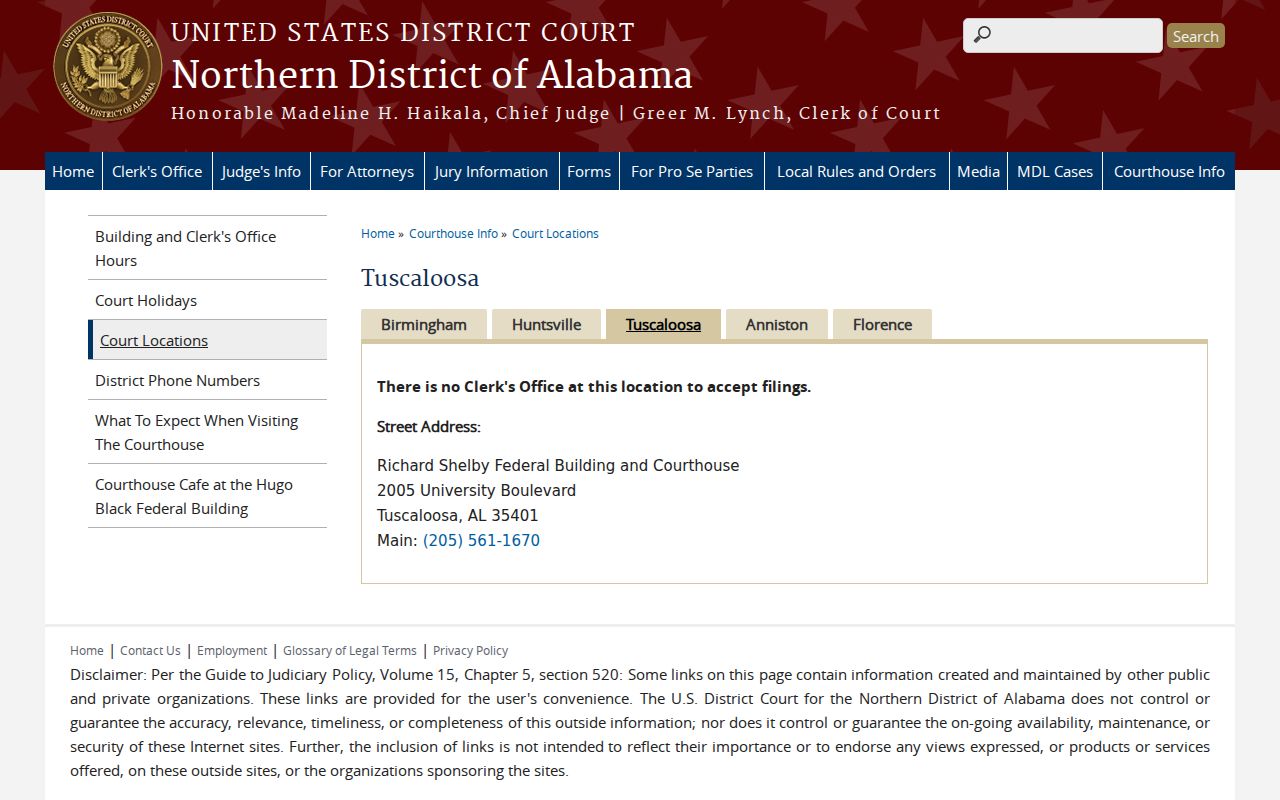
Federal criminal records use the federal court and PACER system, while local state charges remain with Alabama trial courts.
Shelby County Criminal Records and Custody
A criminal case file does not show every part of a person's current jail conditions. The Sheriff's inmate list supplies booking dates, charge descriptions, bond type, and bond amount for people in county custody. Jail visitation rules cover access to inmates, not access to criminal pleadings or dispositions. The full court file remains the better source for the legal outcome.
The Shelby County Jail visitation page is an official source for custody visits.
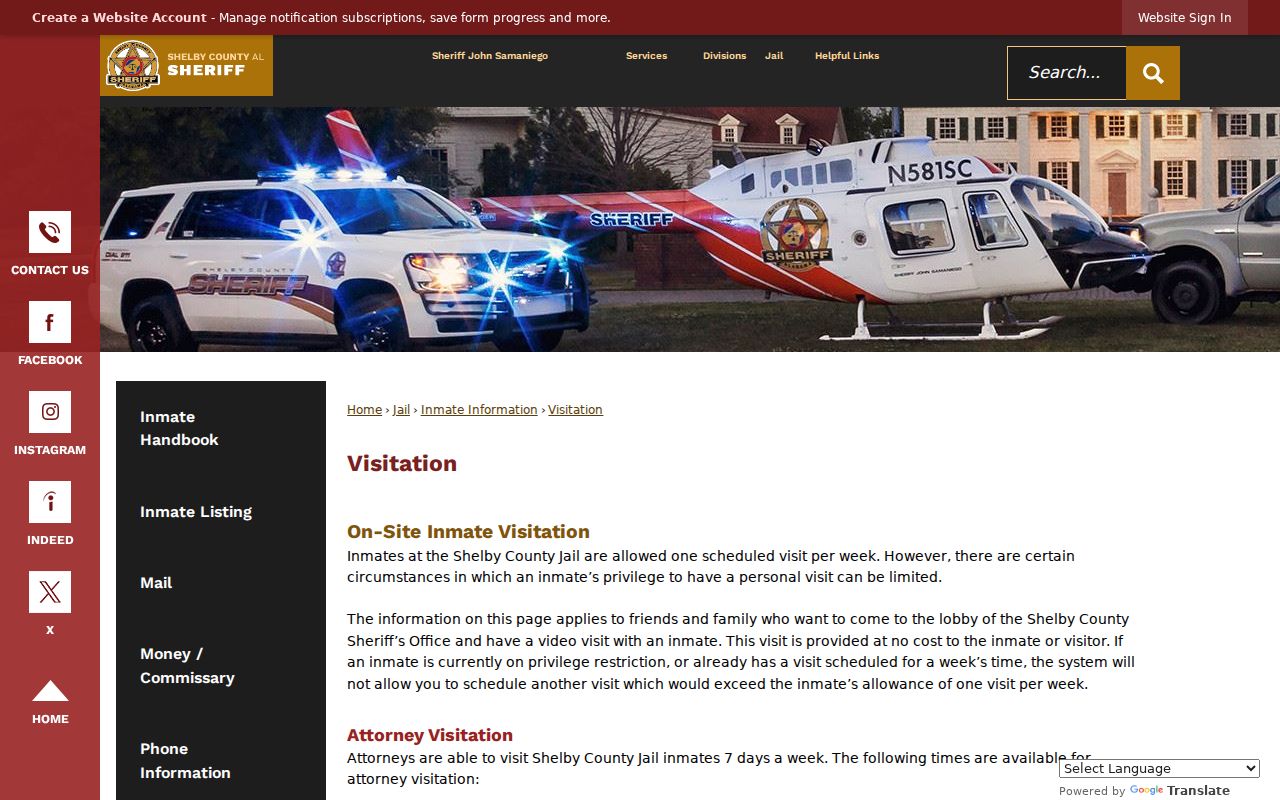
That operational record should not be read as a substitute for Shelby County criminal court records or the court's sentence.
Important: Public court lookups are not consumer reports and must not be used for decisions governed by the Fair Credit Reporting Act.
Restricted Shelby County Criminal Records
Not every field in a Shelby County criminal record is open. Juvenile matters, sealed or expunged files, minor names, Social Security numbers, financial account data, and other protected identifiers may be withheld or redacted. A missing portal result does not establish that no case ever existed. It can reflect the limits of the docket search, a municipal or federal custodian, an older paper file, or a lawful access restriction.
Probate judicial and recording records are also separate from criminal cases. The Shelby County Probate ROAM search covers recording-room material rather than Circuit or District criminal records.
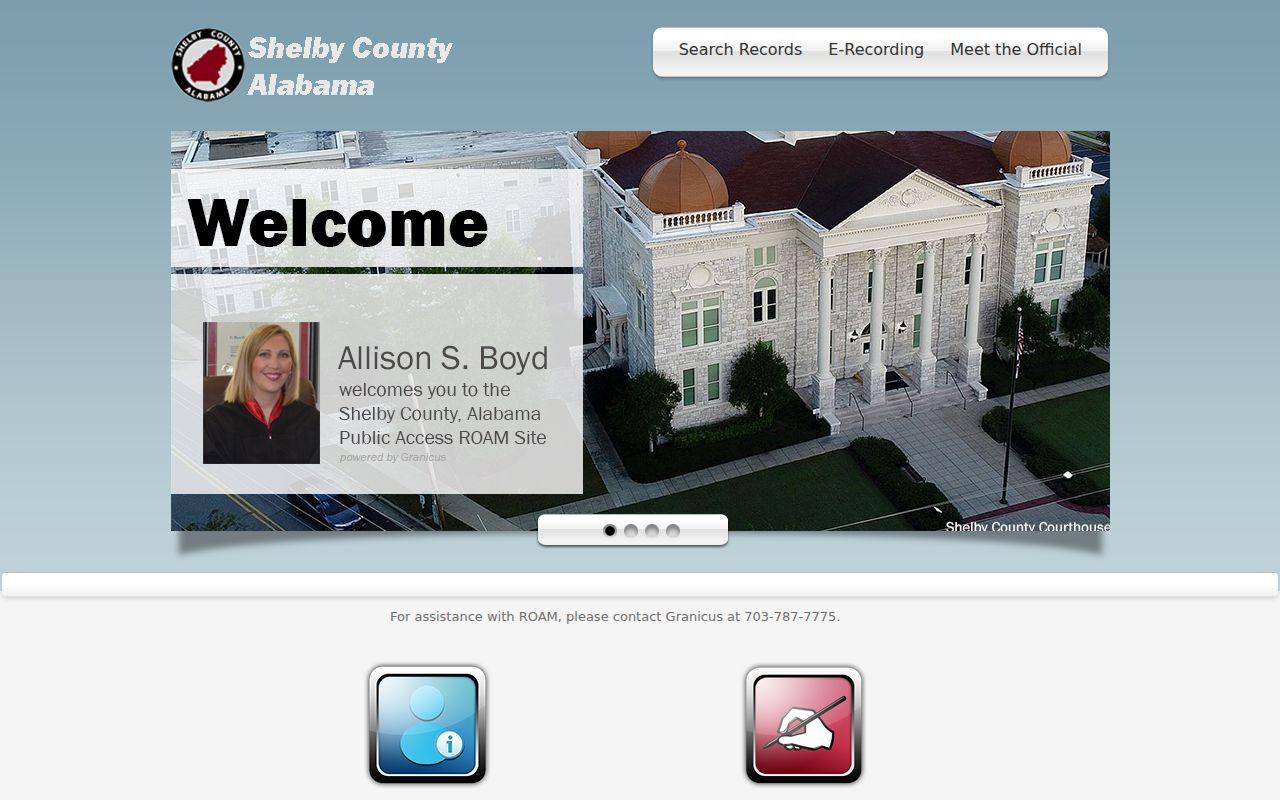
The separate portal shows why searchers must choose the custodian that actually holds the Shelby County record type.
For a final check, contact the Circuit Clerk's District, Circuit Criminal and Traffic supervisor at (205) 670-5266 or the assistant supervisor at (205) 670-5267. A certified copy is the sound choice when the record will be filed with an agency or court. The clerk can provide records and process details, but cannot give legal advice.